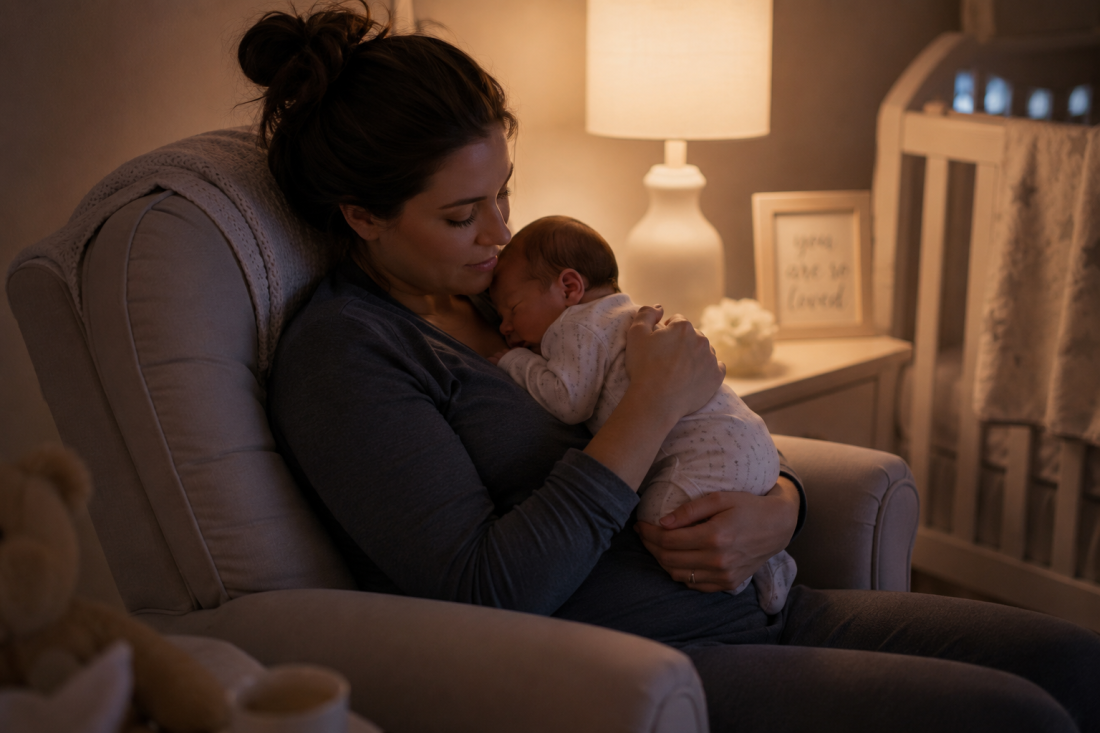
Once you've been chosen by an expectant mother, it's natural to start thinking about bringing a baby home.
Should you set up the nursery? Buy a car seat? Tell everyone? Pack a hospital bag?
Preparing can feel exciting. However, adoption also involves uncertainty. Until placement occurs and the appropriate legal steps are completed, an expectant mother is still making decisions for herself and her baby.
So how do
Being chosen by an expectant mother can bring emotions that are difficult to describe.
You may feel excited. Relieved. Nervous. Hopeful.
And underneath all of those feelings may be one persistent thought:
It's okay if the first conversations feel awkward
You may have imagined meeting an expectant mother many times while waiting to adopt. However, the actual experience can feel very different.
What should you ask?
How much should you talk
Many adoptive parents wonder when they should tell their child they were adopted.
Should you wait until they are old enough to understand? What words should you use? What if talking about adoption brings up difficult questions?
These concerns are understandable. However, adoption does not need to begin with one big conversation.
Instead, families can make their child's adoption story a natural part of everyday family life from
Bringing your baby home after placement can feel like the moment you have been waiting for.
Yet, the adoption process isn't quite finished.
There is usually a period between placement and adoption finalization when your family is settling into life together while additional legal and agency requirements are completed.
For adoptive parents, knowing what to expect during this time can make the next steps feel much more manageable.
If
Getting the call that you've been chosen by an expectant mother is a moment you'll probably never forget.
After weeks or months of waiting, it can feel like everything suddenly becomes real. Along with the excitement often comes a new set of emotions - joy, nervousness, hope, and uncertainty.
Being chosen is an important milestone, but it is also the beginning of a new chapter in the
The time before an adoption placement can be filled with excitement, hope, and a lot of questions.
You may be thinking about the nursery, preparing for a baby, and wondering when your life might change. At the same time, there are important conversations that can help you feel more prepared for the adoption process.
Asking questions before adoption placement is not about predicting everything that will happen.
Open adoption can feel exciting, meaningful, and a little intimidating all at the same time.
Many hopeful adoptive parents wonder what the relationship will actually look like and whether they'll know what to say or do. Those questions are completely normal.
Preparing for open adoption isn't about having all the answers. It's about approaching the relationship with honesty, respect, and a willingness to learn.
Understanding what open adoption
Few people talk openly about one of the hardest parts of adoption: the emotional pain of not being chosen.
You may spend days hoping for a situation to move forward, only to hear that an expectant mother chose another family. Sometimes families never even receive an explanation. Other times a match may begin and later change unexpectedly.
Those moments can feel deeply personal.
Many hopeful adoptive parents quietly
Maybe you thought once the paperwork was finished and your profile was complete; things would start moving quickly. Instead, you may find yourself checking your phone constantly, wondering when your life will finally change.
The waiting stage of adoption can feel emotionally exhausting in ways many people do not fully understand. One day you may feel hopeful and excited. The next, discouraged and emotionally drained. That
Many hopeful adoptive parents picture the moment they meet their baby and instantly feel overwhelming connection and certainty. But for some families, attachment grows more slowly and when that happens, it can bring unexpected guilt, fear, or even panic.
If you’re worried because bonding doesn’t feel immediate, you are not failing as a parent.
Attachment is not always instant. Sometimes it grows quietly over time.
Why some adoptive
We use cookies to enhance your browsing experience, serve personalized ads or content, and analyze our traffic. By clicking "Accept", you consent to our use of cookies.
Functional
Always active
The technical storage or access is strictly necessary for the legitimate purpose of enabling the use of a specific service explicitly requested by the subscriber or user, or for the sole purpose of carrying out the transmission of a communication over an electronic communications network.
Preferences
The technical storage or access is necessary for the legitimate purpose of storing preferences that are not requested by the subscriber or user.
Statistics
The technical storage or access that is used exclusively for statistical purposes.The technical storage or access that is used exclusively for anonymous statistical purposes. Without a subpoena, voluntary compliance on the part of your Internet Service Provider, or additional records from a third party, information stored or retrieved for this purpose alone cannot usually be used to identify you.
Marketing
The technical storage or access is required to create user profiles to send advertising, or to track the user on a website or across several websites for similar marketing purposes.